
We have Fernlets & we have Ferns! The spores for these tiny ferns, below, were sown last summer. It took several months for the spores to go through their process of germinating spores, having sex, then making frondlets. The picture below left is Christmas Fern, Polystichium acrostichoides, from a collection at the farm. The picture below right is Dryopteris marginalis, from a spore collection in South Dekalb County.


These little green fluffs, below on the left, are “fernlets,” or as a voice from the 70’s said:”sporelings.” They are prothallus, the sexy fern stage. Fern spores to prothallus is a few months to one year. Prothallus to full sized fern is one more year, a bit more for some species such as Christmas Ferns, Polystichium acrostichoides.
Below left, tiny bright green Dryopteris fernlets, some putting out their first leaves.
The small germination trays, 10"x10", became so overcrowded, that once the prothalli were well developed and had started to develop fronds, we took a chance on disturbing them and put them into a larger 10"x20" tray. One 10'x10" tray made several 10"x20" trays. It took the fernlets about a week to adjust, but then the little fluffs decided to get cranking and producing the tiniest fronds. 3/8 of an inch tall, errr…short, max.

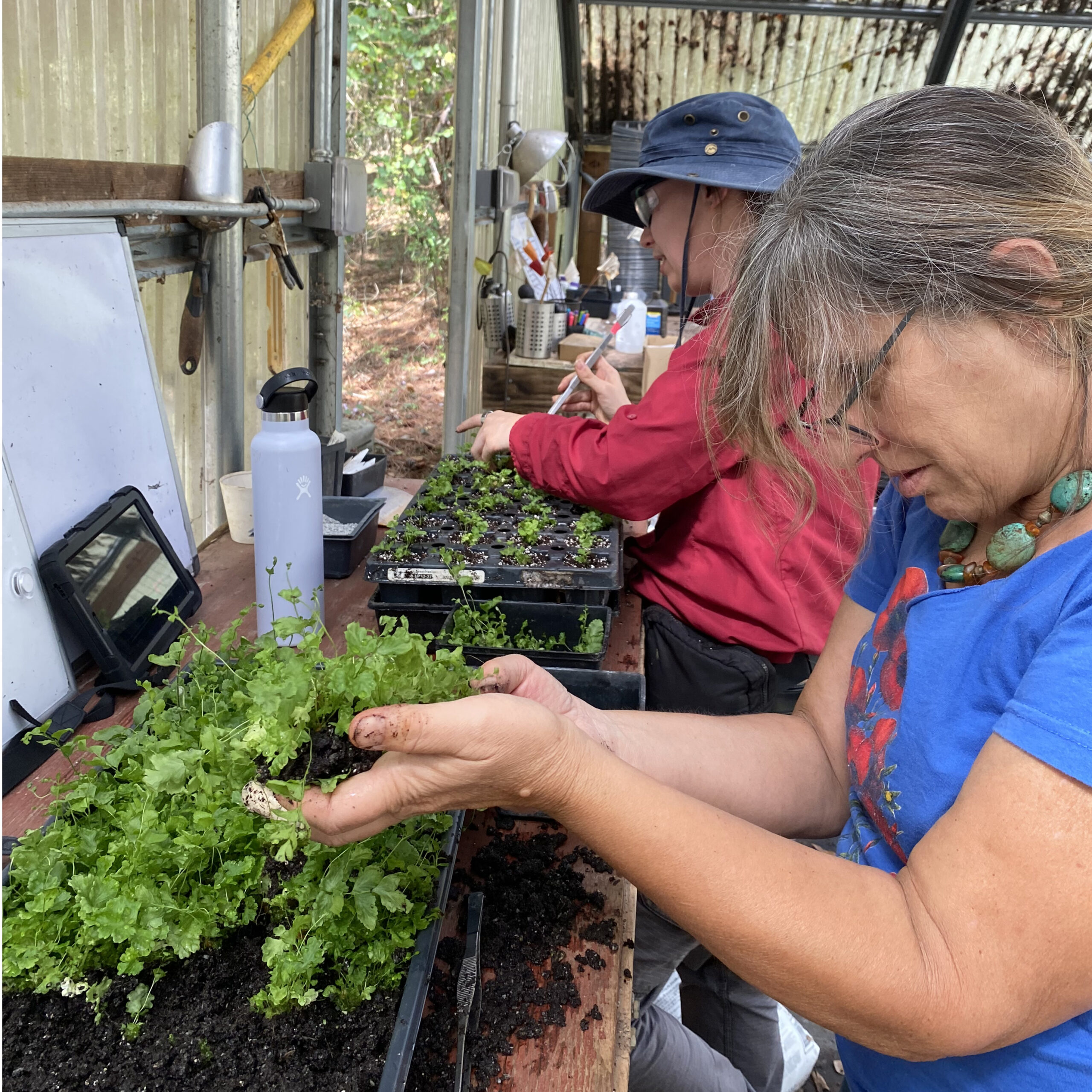
Many ferns are happy with light at between 200-500 footcandles. For contrast, depending upon cloud cover, sunshine is many thousands of footcandles. Our grow room has high output grow lamps, with each LED unit putting out 4000 footcandles. I was afraid it would be too much light, but the tiny green bits seem to be doing fine. Take a look at all of this new (tiny) growth. Above, on the right, we are gently pricking out young Polystichium ferns to put into plug trays 6 months later.

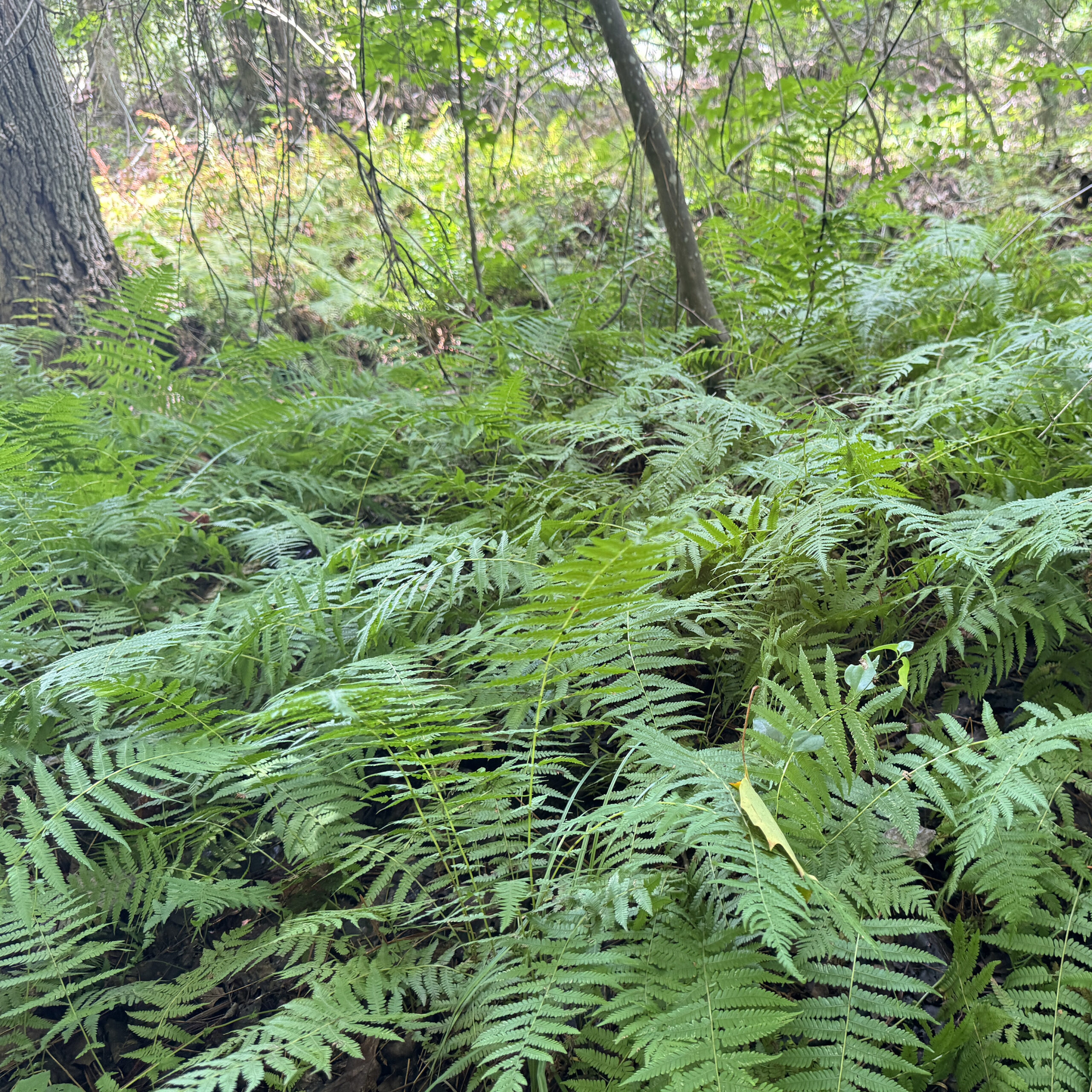
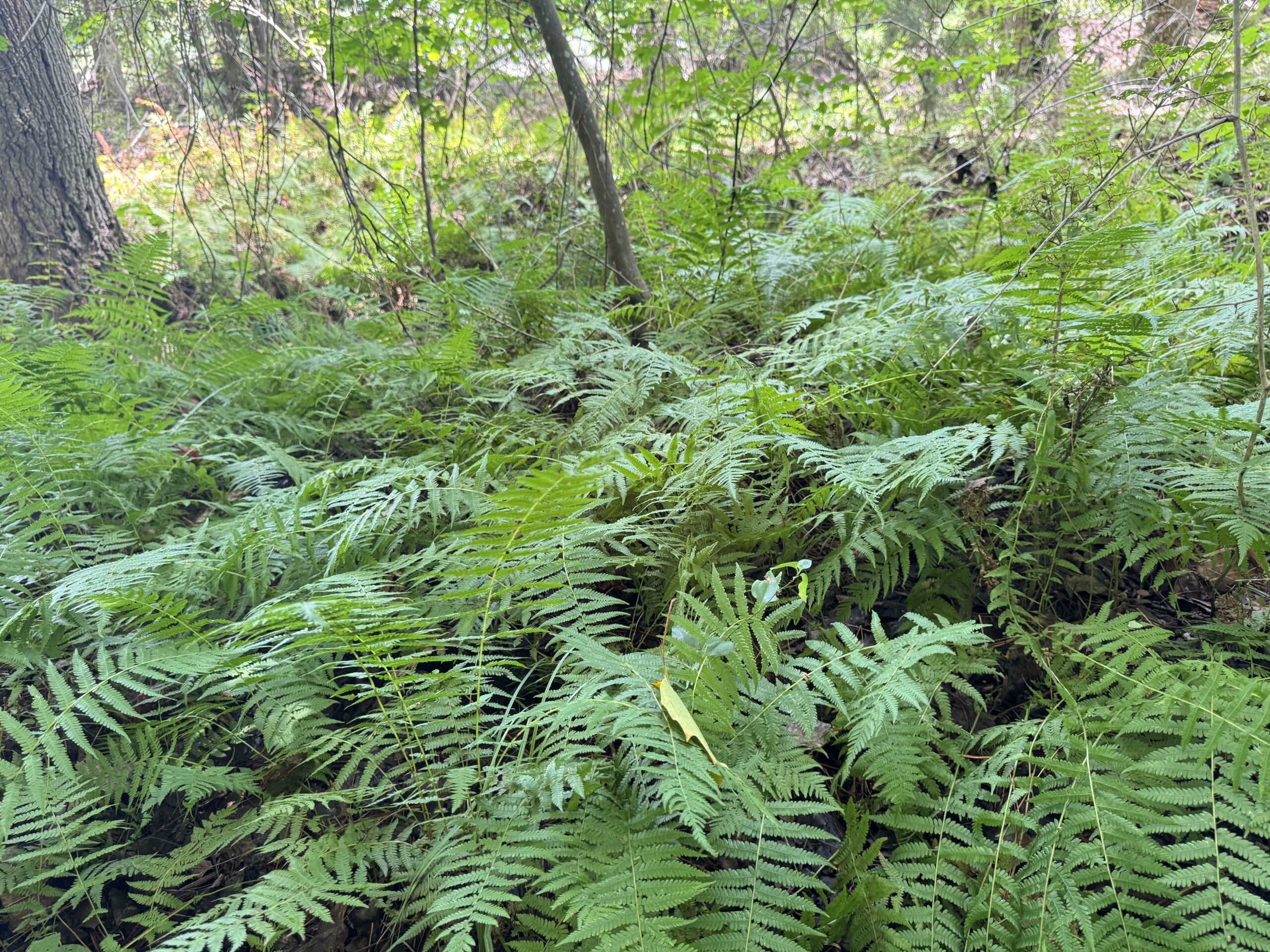
Above, in our Southeastern forest, New York Fern, Amauropelta noveboracensis, is a deciduous fern that likes rich soil, moist slopes, and bottomlands. On the left is a close up of the fern fronds. This fern will form large colonies of fronds when it finds itself in the right conditions. The photo on the right is a large colony of New York fern growing on a moist, well drained forest slopes or bottomlands with rich soil. It doesn't want boggy conditions, but it needs good moisture.
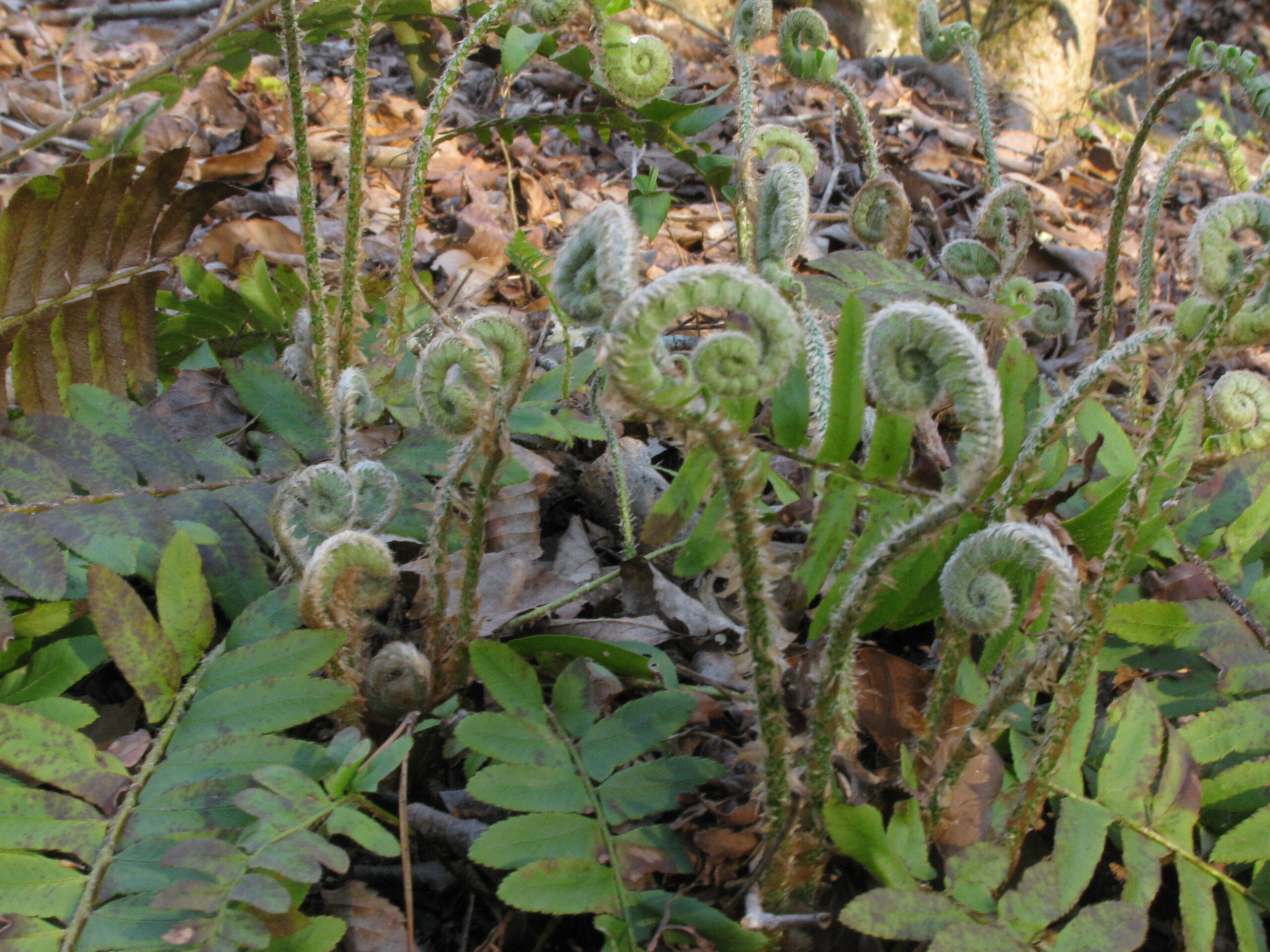
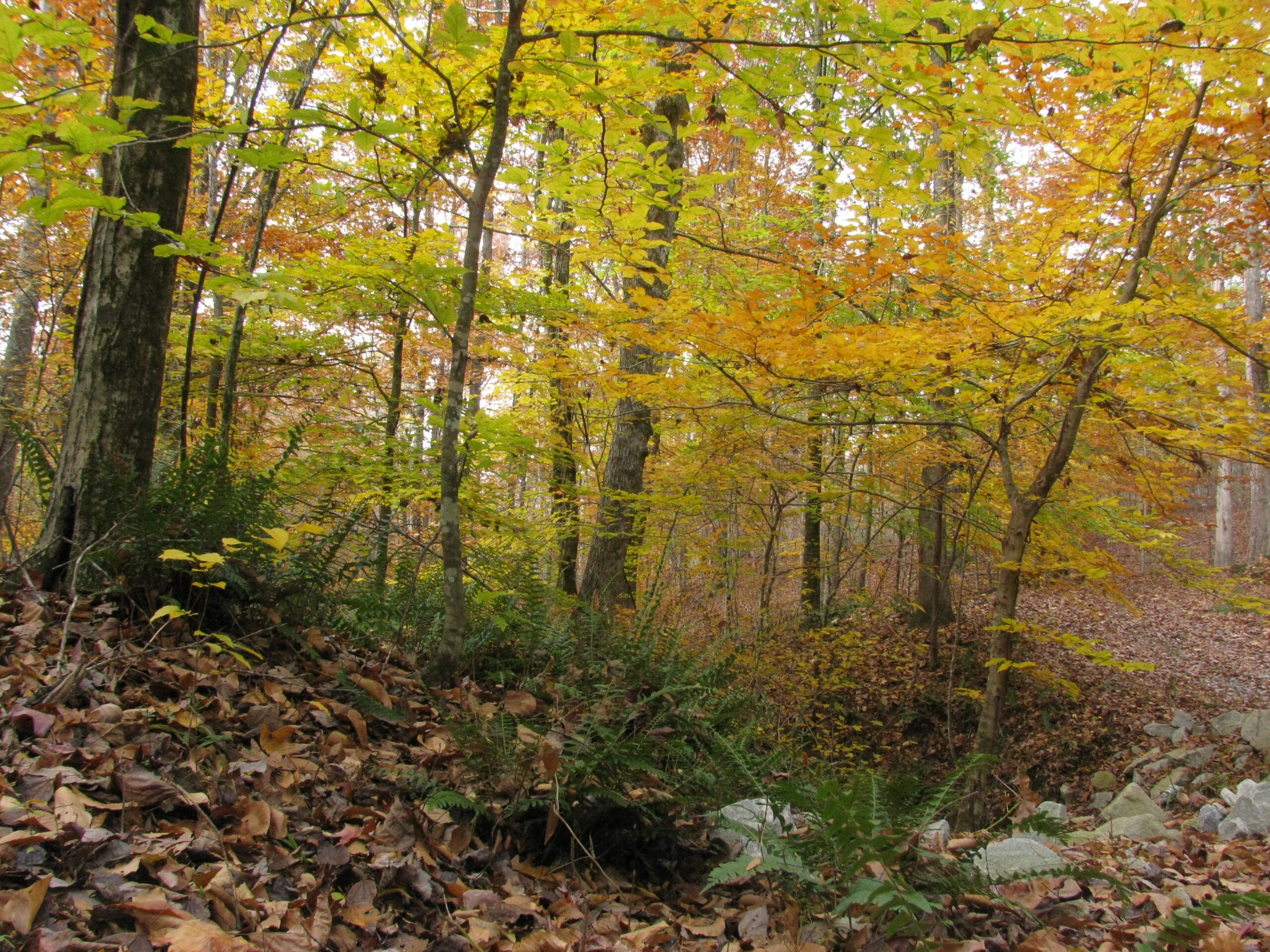
Christmas Fern, Polystichium acrostichoides, is an evergreen fern that will take slightly drier conditions than New York Fern or Lady Fern. On the left are the fronds pushing up into the cool air of early spring. On the right is one of the very old and well established colonies of Christmas ferns in the forest at Beech Hollow seen in late October. These ferns are native plants to much of the eastern half of the North American continent. Christmas Fern does best on shady, well drained slopes that are well drained and have rich soil.
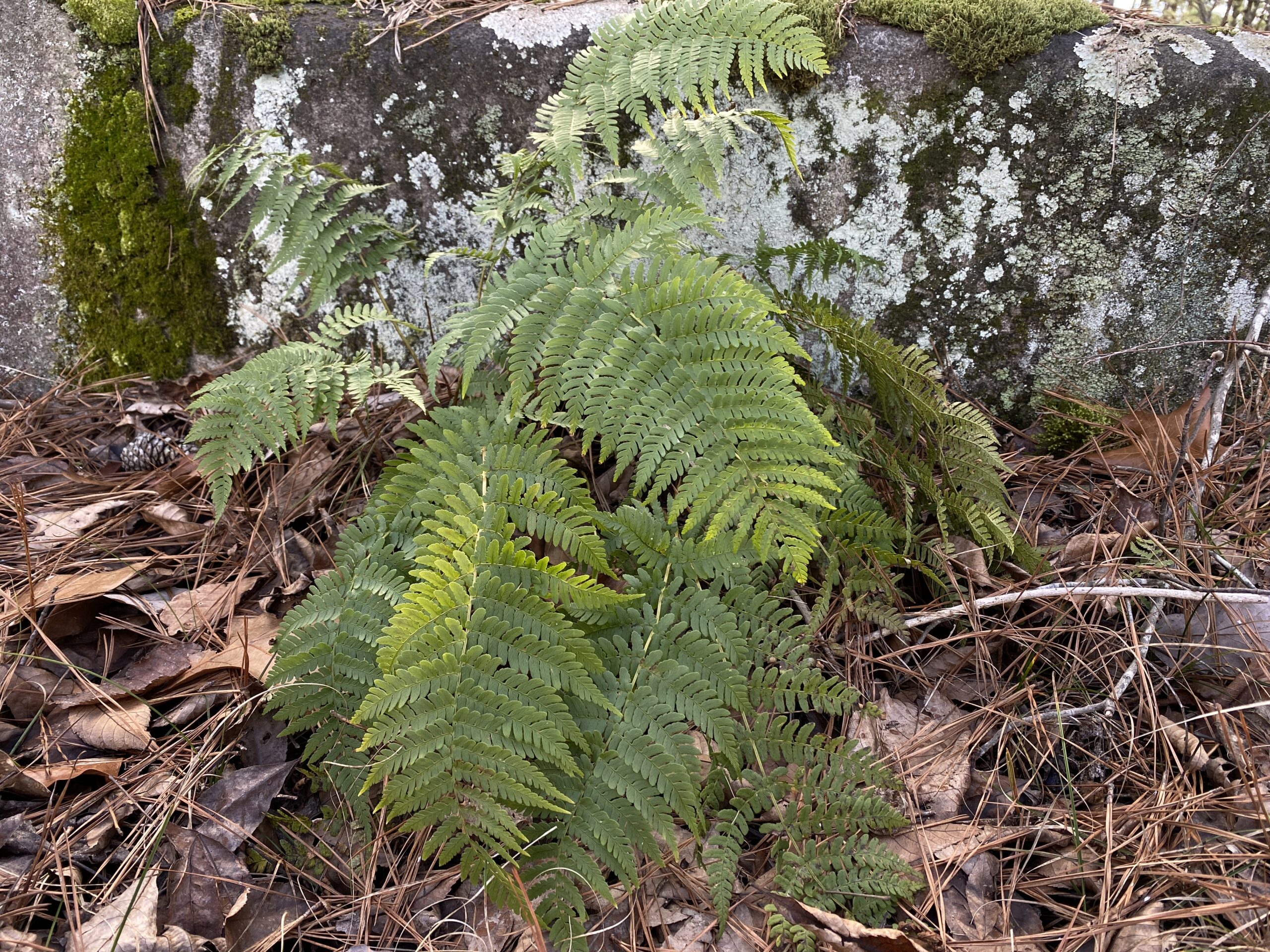
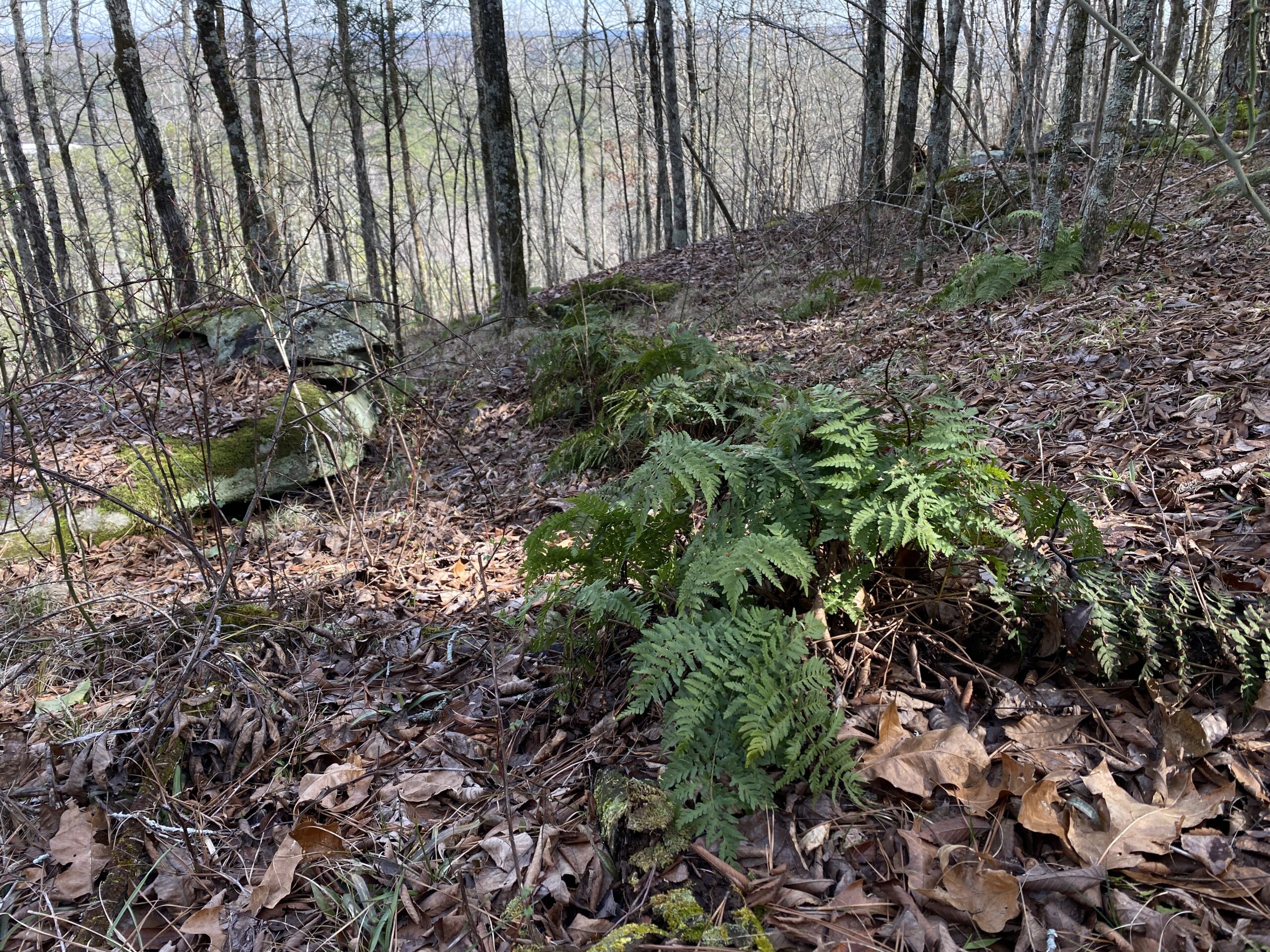
Another evergreen fern, Dryopteris marginalis takes good drainage, can handle living on rocky bluffs, cedar glades, and well drained slopes. It can handle sandy soil that has a good percentage of organic material. On the left is a view of the fern fronds, while on the right is a stand of Marginal Wood ferns in early winter.
It can take 18 months to 2 1/2 years to produce a mature pot of ferns. We are working on it. In fact this month we will be selling our first fern crop that we started from spores. All of the ferns we will be offering this year will be local genotypes from our own Southeastern woodlands.