

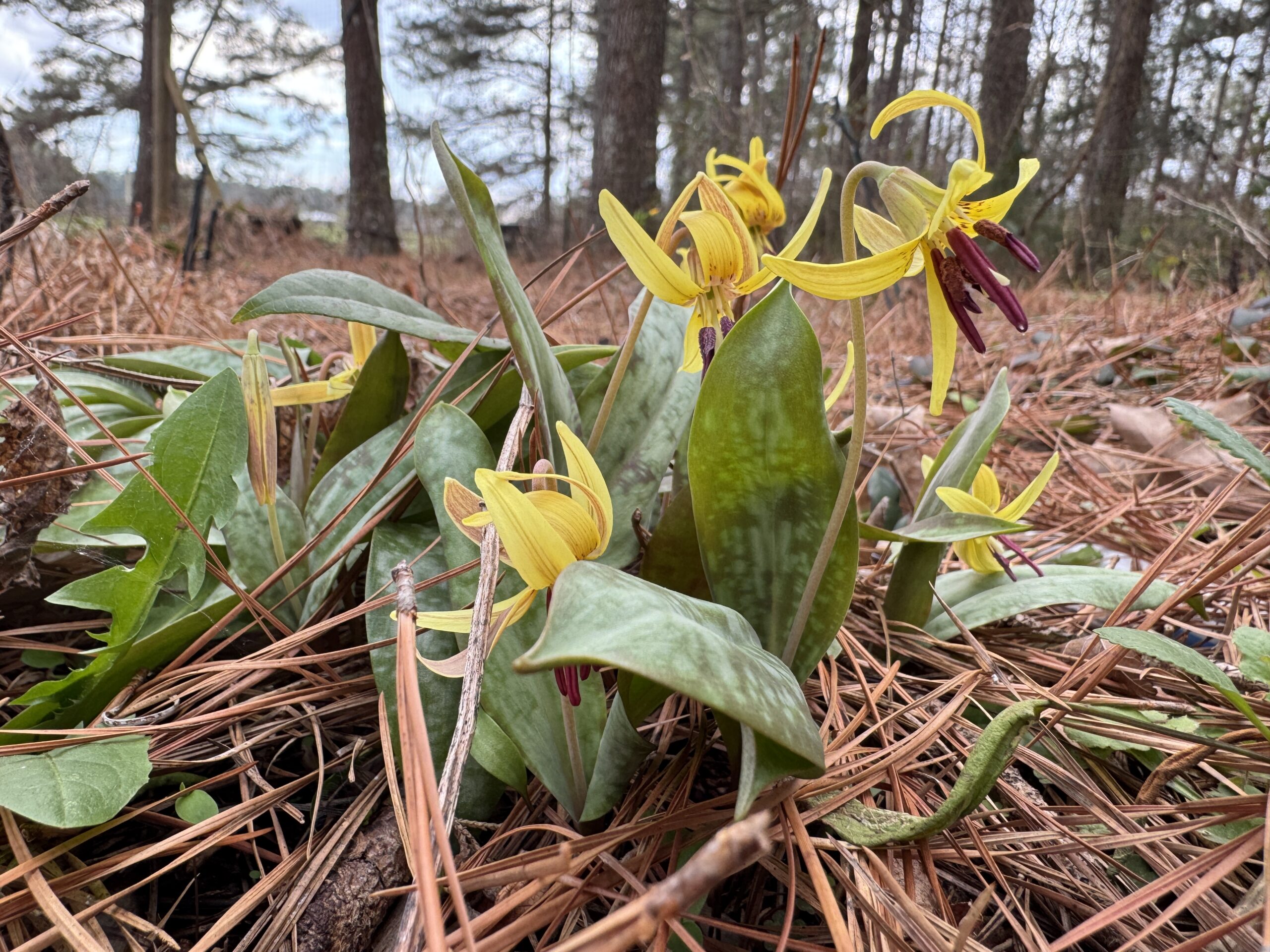
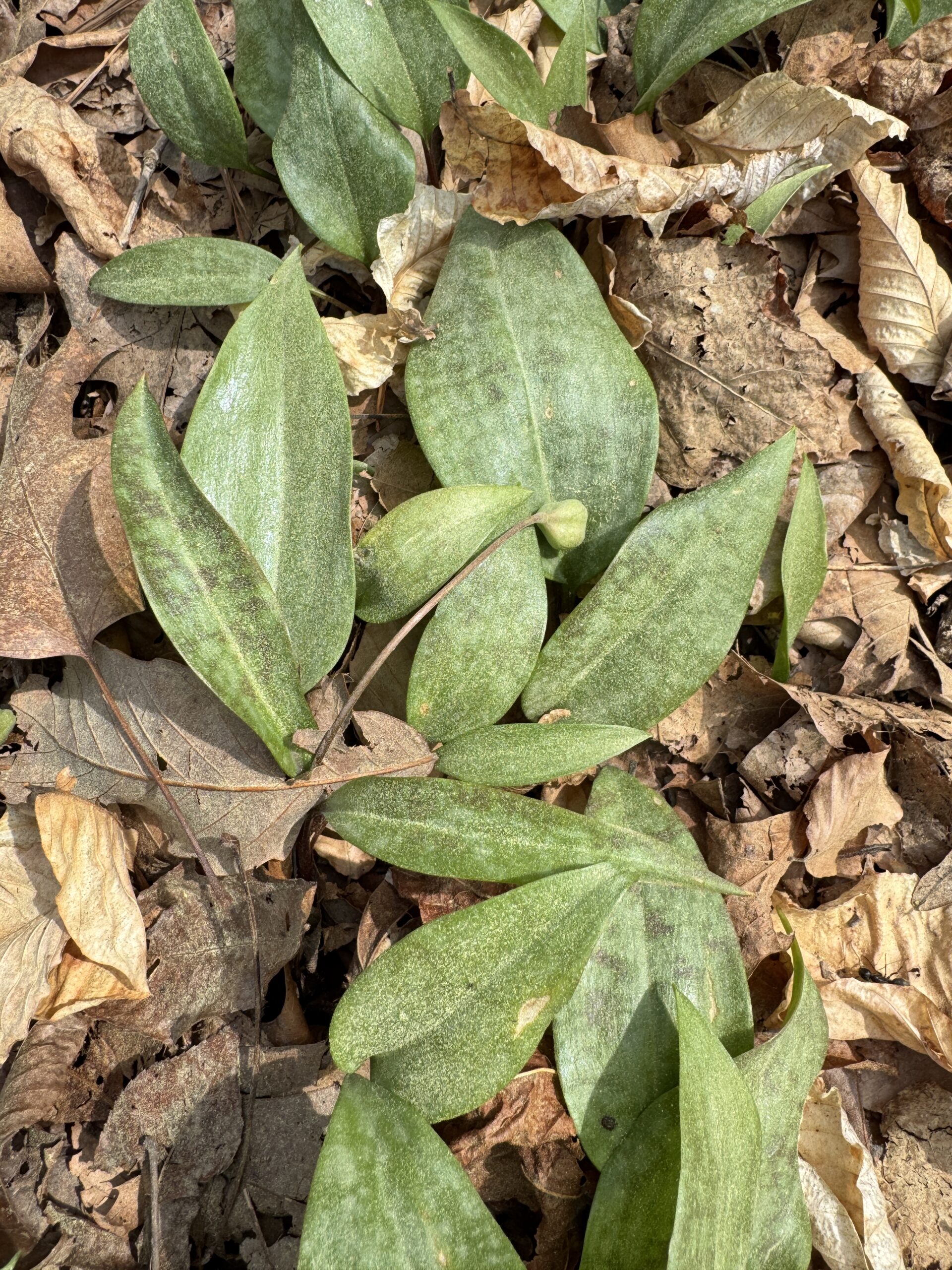
Four weeks ago, the moist areas of the mountain were flushed with Trout lilies, Erythronium americanum, blooming. This past week they were showing off plump green pods full of developing seeds. (The picture of the blooming trout lilies below is from the farm. The picture to the right is from Stone Mountain.)
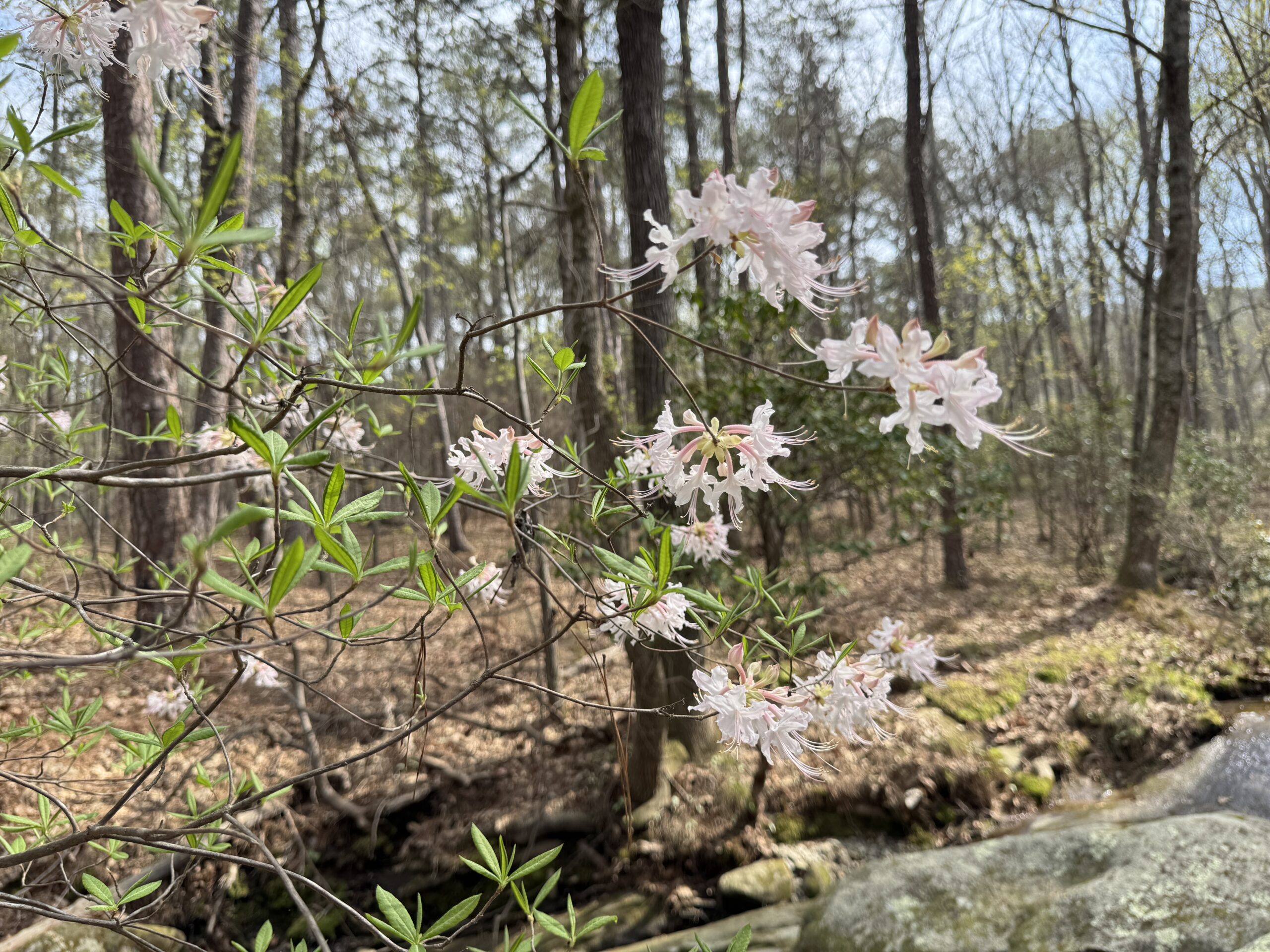
The Piedmont Azalea, Rhododendron canescens, was in full flower, and the fragrance drifted for yards down the forest trail, well before you saw the plant. This elegant understory shrub is usually found near or along streams or moist ravines in mature forests with rich soil. If you're patient and can sit a minute, you might be treated to a Tiger Swallowtail butterfly coming in to nectar.
Just glorious.
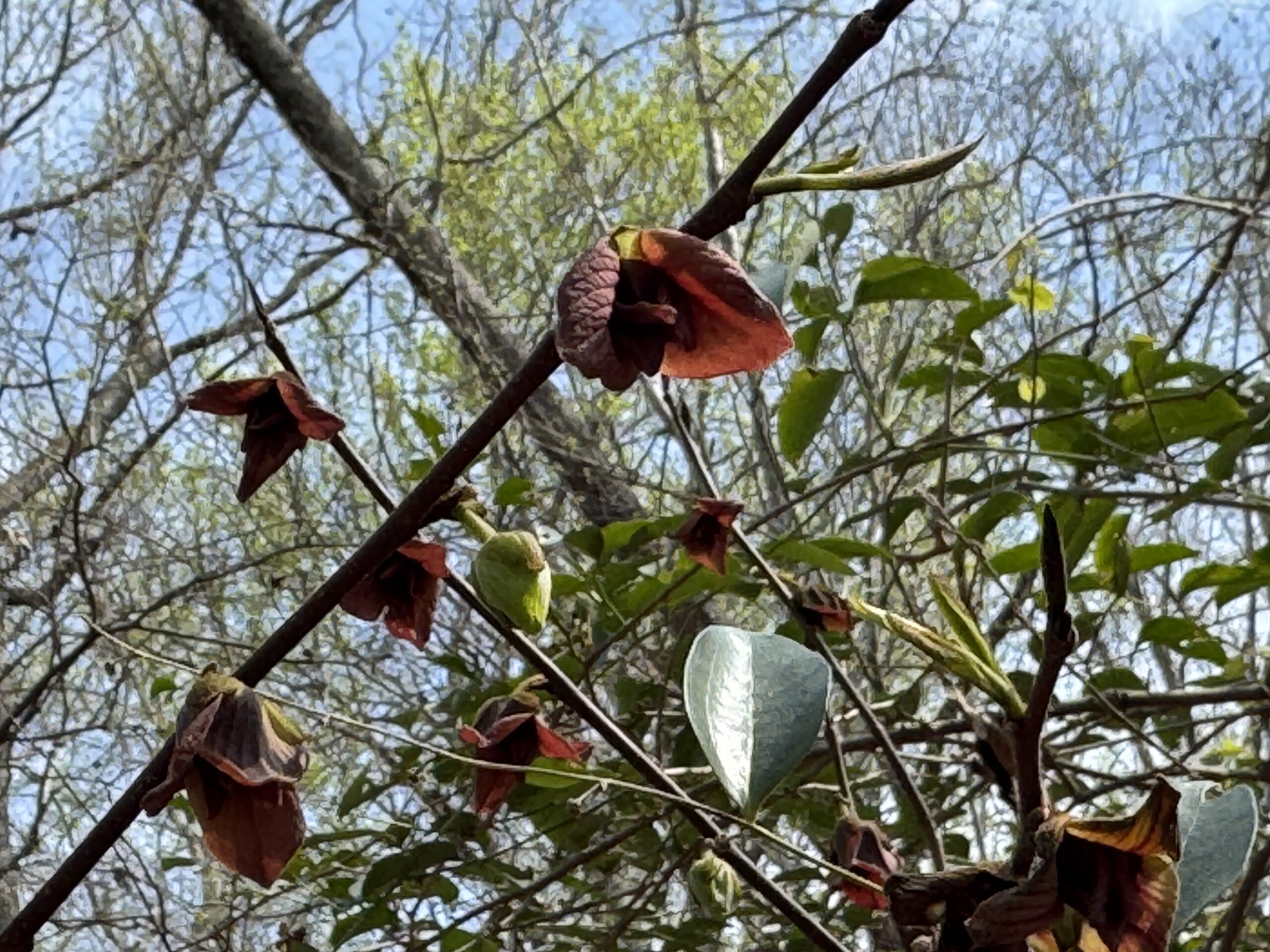
The Pawpaw, Asimina tripetala, is unfolding its burgundy blossoms this week. This flower is fertilized by insects and beetles that are attracted to stinky stuff, like rotten meat. The large, tender fruit is ripe in late summer.

On the left is the Yellow Woods violet, Viola hastata, which was blooming across the trail from the Pawpaw.
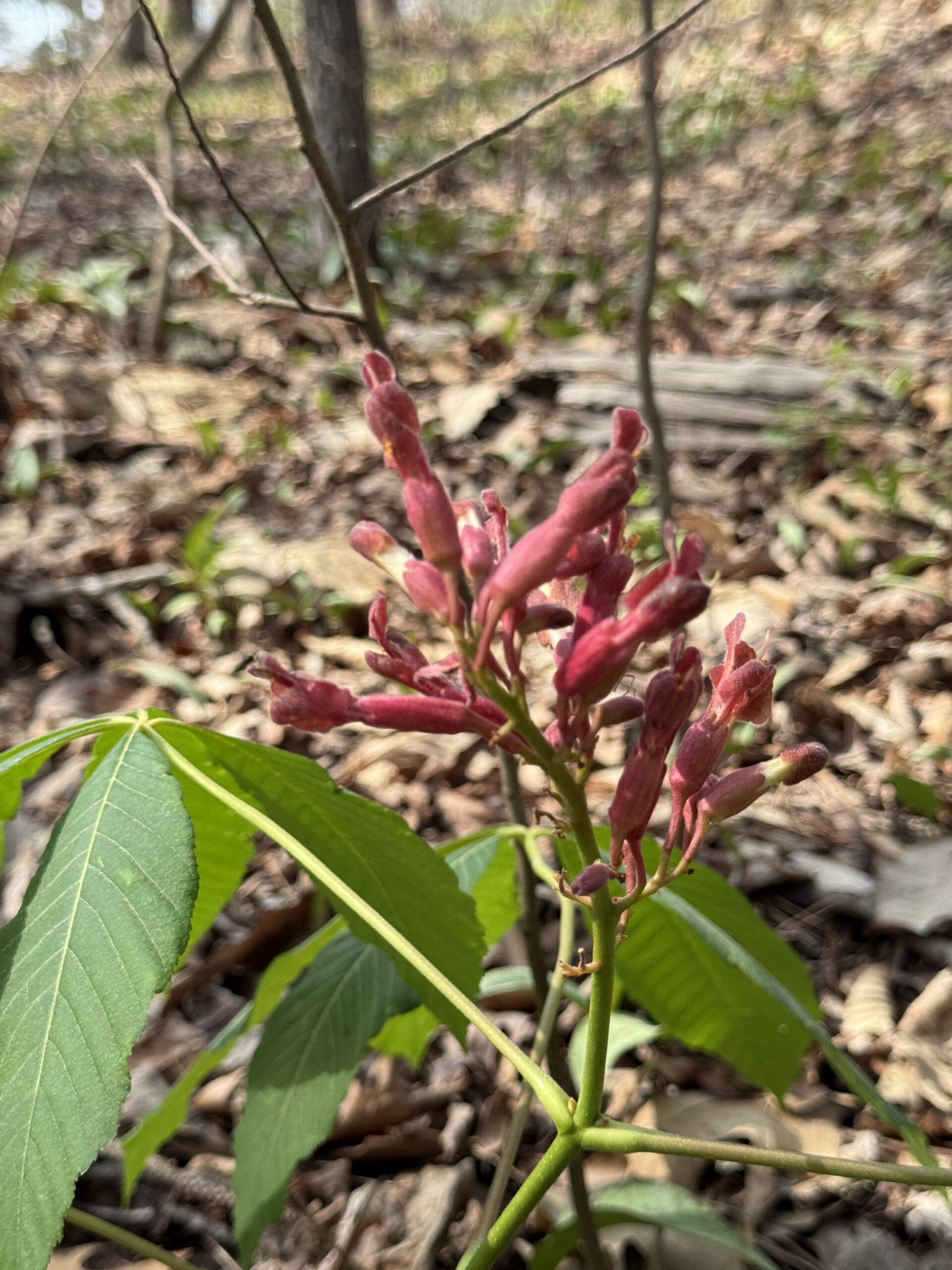
Red Buckeye, Aesculus pavia, blooming along the trail at Stone Mountain. Some botanists tell me this is a hybrid form of Red Buckeye with Painted Buckeye. It very well could be.
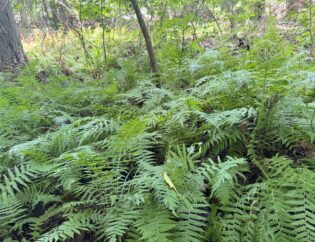
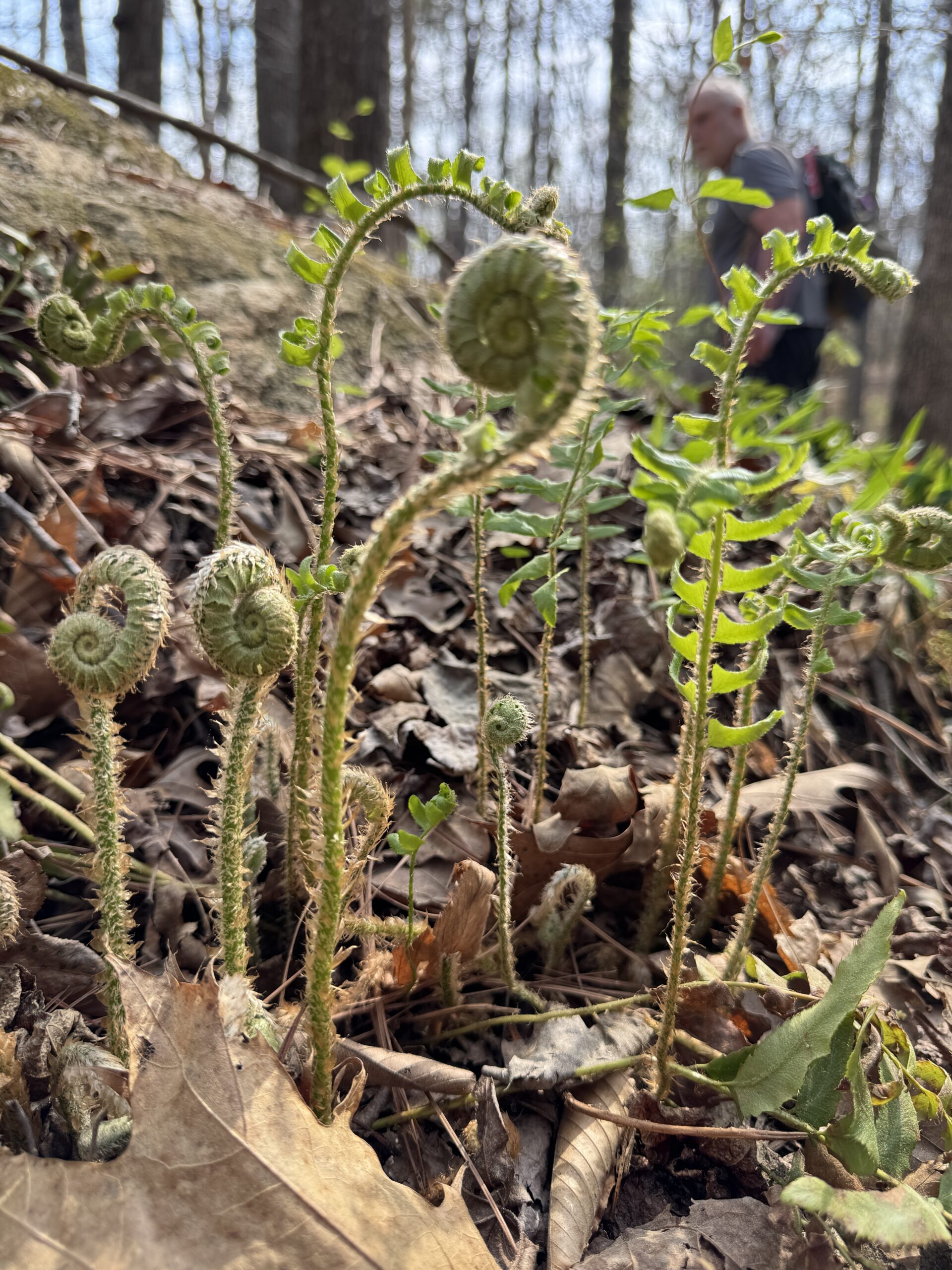
On the right, Christmas fern, Polystichium acrostichoides, here uncoiling its new spring fronds, is a fern often found in mesic, well drained, uplands.
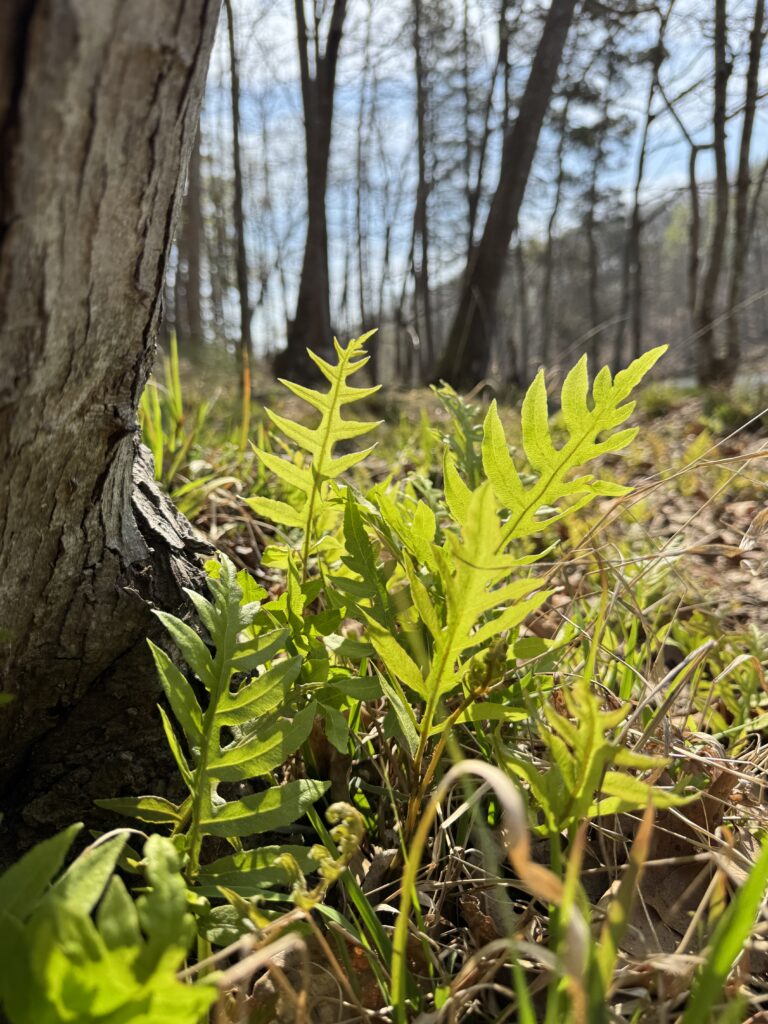
To the left, Netted Chain fern, Lorinseria areolata, is pushing its new greenery into the spring sunshine. Netted Chain Fern is a fern of bottomlands and wetlands. Both occur at Stone Mountain, but in different ecotones.
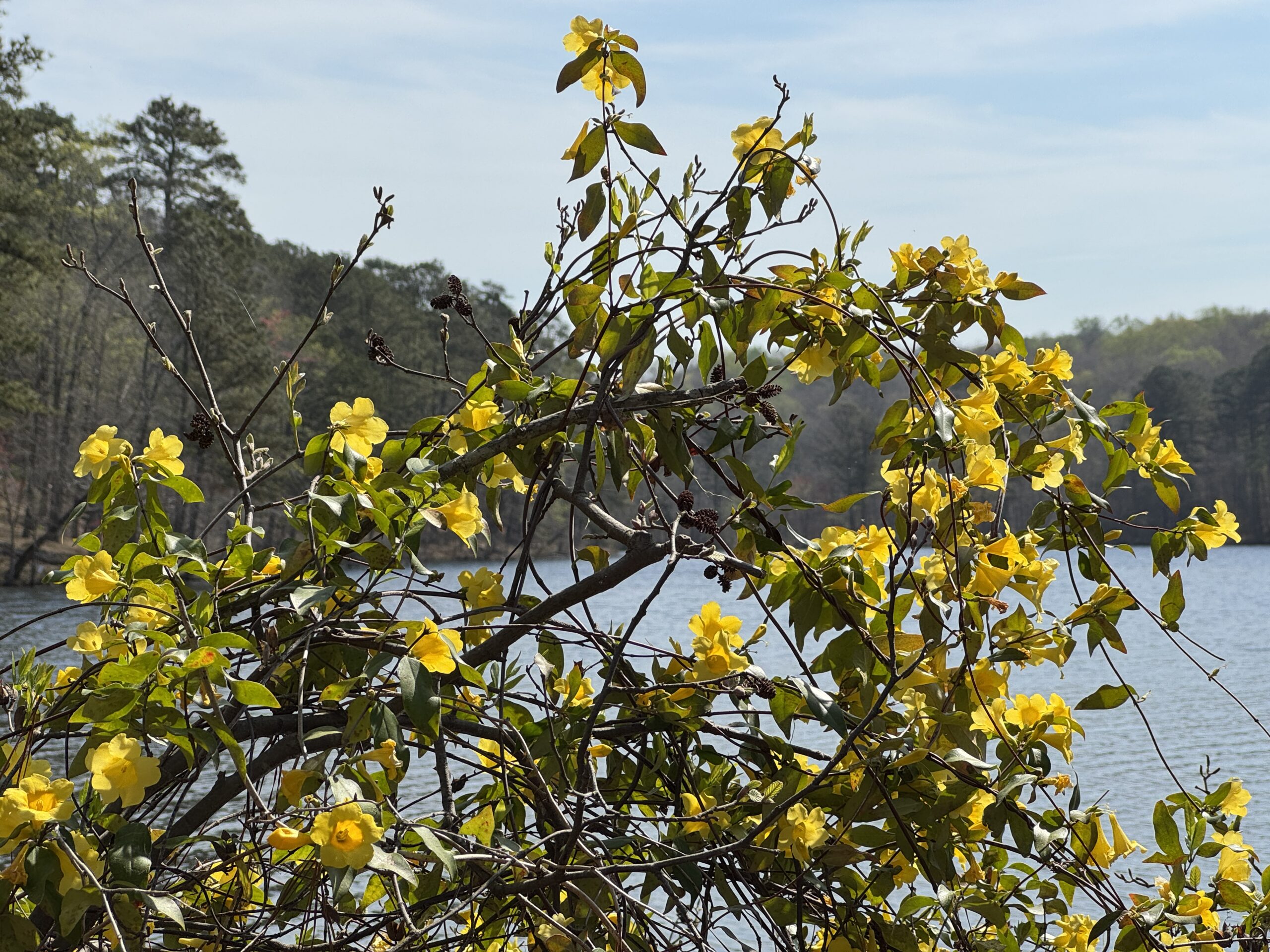
Carolina Jessamine, Gelsemium sempervirens, is one tough evergreen vine. It seems to be able to grow anywhere except the driest, most barren soil. Here it is next to the lake at Stone Mountain, unashamedly advertising its whereabouts with a powdered-sugar fragrance and taxicab yellow blooms. Spectacular and early pollinator support for native bees.
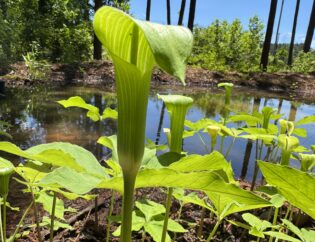
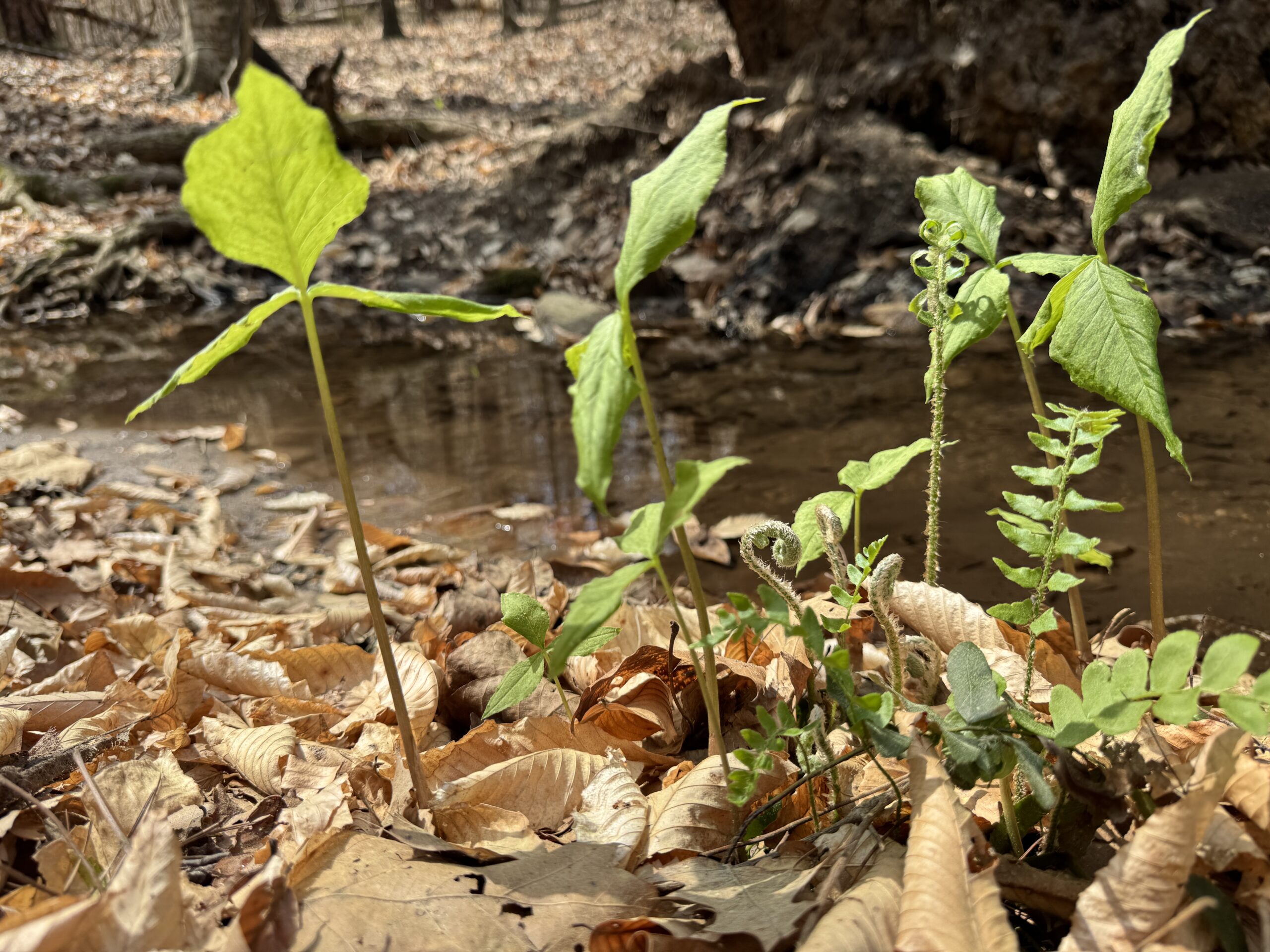
The leaves of Jack in the pulpits, Arisaema triphyllum, are pushing up through the ground now. They will be unfurling their bizarre flowers in a week or two. Jack in the pulpit is a plant that needs to have its feet wet or at least very very moist. It is often found along streams, or in areas that don't drain well, and it wants shade.
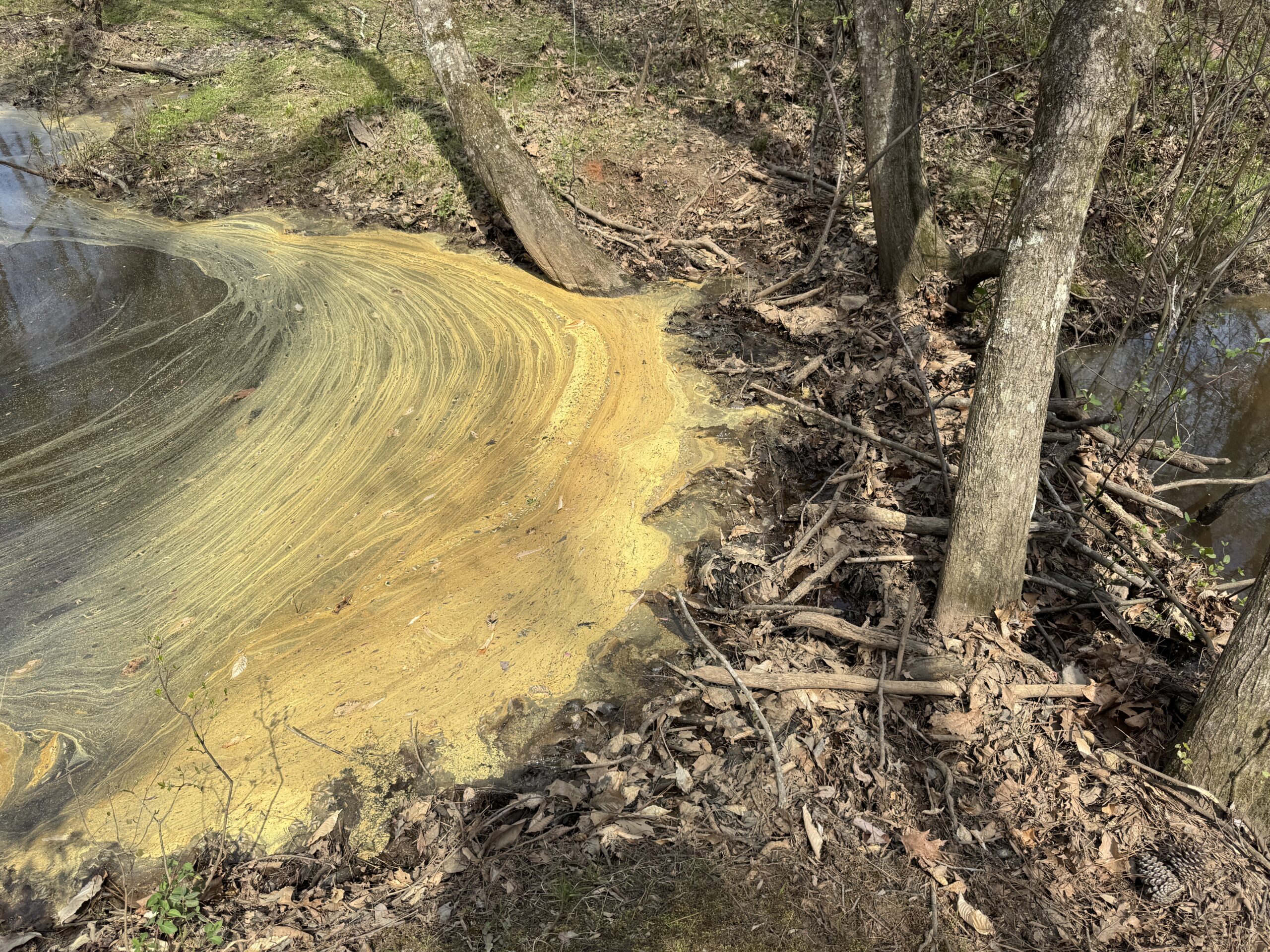
Here's a trail side Beaver dam plugging up a small creek at Stone Mountain Park.
I wish I had taken a picture of the beaver chews on the trees we had just passed! This is probably the dam for the critters that chewed the tree trunks and logs that we saw on the trail a few minutes before.